A Beginner's Guide to British Gemstones: From Amethyst to Blue John
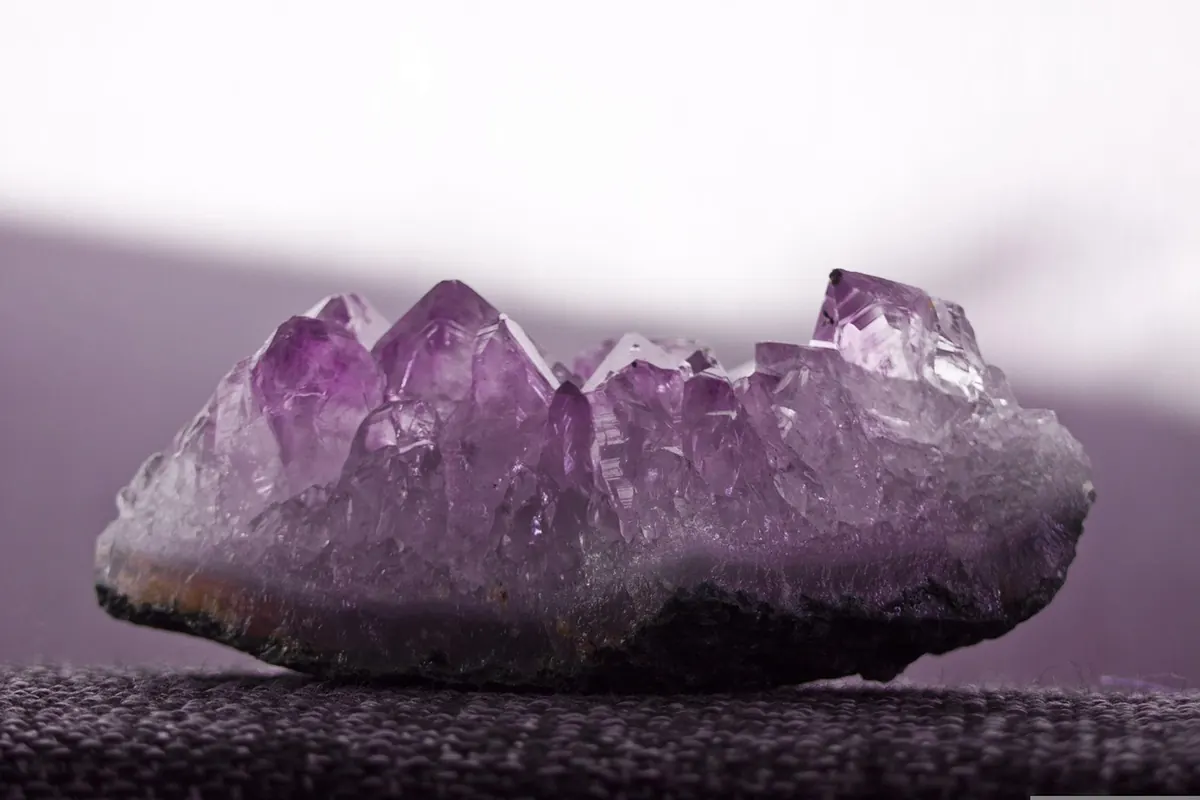
Say the word "gemstone" and most people picture a ruby-red corundum or a flawless diamond. Britain seldom gets a mention. Part of that is geology: these islands are rich in ancient rock but poor in the volcanic plumbing and pegmatite veins that produce large, clean crystals. What we do have is character. A purple amethyst from a Cumbrian hillside, a banded slice of Blue John, a polished pebble of Whitby jet — each one tells you where it came from.
This guide covers the British materials you are most likely to encounter, where they turn up, and how to tell them apart when you are standing on a beach with cold hands and a pocket full of hopeful-looking pebbles.
What Counts as a British Gemstone?
In the trade, a gemstone is any mineral or organic material valued for colour, pattern, durability or rarity. Hardness matters, but it is not the whole story. Quartz sits at 7 on the Mohs scale and shrugs off daily wear; fluorite sits at 4 and cleaves if you look at it sharply. Both are cut and polished, just for different purposes.
British gem material tends to be small and ornamental rather than large and faceted. Much of it ends up carved, tumbled or cut as a cabochon — the smooth, domed style that suits banded and patterned stones. That is not a compromise; it is simply what the geology gives us.
Amethyst and Smoky Quartz: Quartz With an Accent
Amethyst is purple quartz, coloured by traces of iron together with natural irradiation. British material usually forms small crystals lining veins and cavities in older rocks, and it is well recorded from the iron and haematite districts of west Cumbria as well as scattered localities in Scotland. Expect modest sizes and paler tones than the deep Brazilian crystals in shop windows. Much of it is best suited to small faceted stones or cabochons.
Smoky quartz has a stronger British pedigree. The brown to grey-brown crystals of the Cairngorm mountains gave us the "Cairngorm stone", traditionally set in silver in Highland dress brooches, kilt pins and dirks. A good Cairngorm has a warm, tea-coloured body and clean transparency; many are cut as simple round or oval stones to show that colour off.
Worth knowing too: the rock crystal known locally as "Bristol diamond", found in the Avon Gorge and the Mendips, is clear quartz in small, bright crystals. It is not a diamond, and it never pretended to be — the name is old and entirely geological.
Blue John: Derbyshire's Banded Fluorite
Blue John is a banded variety of fluorite found around Castleton in Derbyshire, most famously at Treak Cliff and the Blue John Cavern. The name probably comes from the French bleu-jaune, blue-yellow, which describes the alternating bands of purple, blue, cream and gold that make it so recognisable.
It formed in veins within Carboniferous limestone, and the quality of the Castleton material is unusual — similar fluorite occurs elsewhere in Britain, but rarely with such striking banding. At Mohs 4 with perfect cleavage in several directions, it is far too soft and brittle for everyday ring wear. Instead it is carved: vases, bowls, obelisks, small ornaments and pendants. Derbyshire workshops have been doing this since the eighteenth century.
How to recognise it
- Curving, parallel bands of purple, blue and yellow-cream.
- Translucent to semi-translucent when held to the light.
- Flat, glassy cleavage planes if a piece has broken.
- Often fluoresces blue-violet or greenish under an ultraviolet torch.
One practical warning: fluorite is known to lose colour after prolonged exposure to strong sunlight. Keep a Blue John vase or pendant away from a sunny windowsill.
Whitby Jet: A Gem That Was Never a Mineral
Jet is not a mineral at all. It is fossilised wood, compressed and chemically altered over millions of years, and the finest British material comes from the Jurassic rocks around Whitby in North Yorkshire. It is light, warm to the touch and surprisingly tough — it can be sawn, turned on a lathe and polished to a mirror finish, which is why it became the defining stone of Victorian mourning jewellery after Queen Victoria wore it following the death of Prince Albert.
Rough jet turns up on the beach below the Whitby cliffs, particularly after winter storms, as dull black pebbles that look unremarkable until you cut or polish them. Two checks are useful. First, weight: jet is remarkably light for its size, while black glass imitations feel heavy and cold. Second, streak: rubbed on an unglazed tile, jet leaves a brownish streak, whereas glass leaves none.
Agates, Serpentine and Other Ornamental Stones
Scottish agates are banded chalcedony that filled gas cavities in ancient lavas, and the Angus coast around Montrose is the classic hunting ground, with pebbles also common on Fife beaches. Cut and polished, they show the concentric "fortification" banding that makes agate so satisfying to collect.
Cornish serpentine comes from the Lizard peninsula: a mottled green stone with red and white ve
Photo: Dobre_wzory / Pixabay