How to Choose a Crystal for Jewellery: Hardness, Setting and Everyday Wear
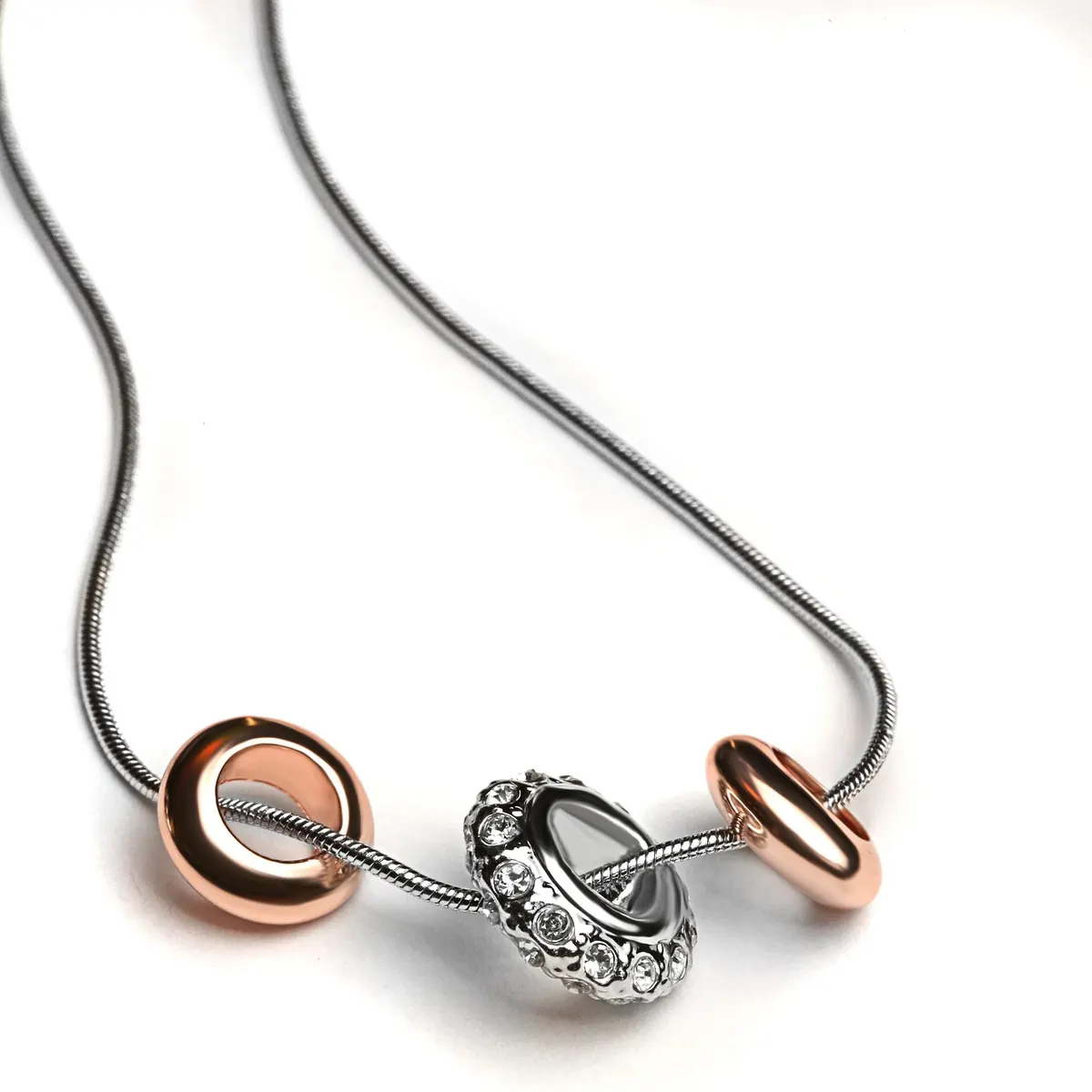
Jewellery takes more punishment than most of us admit. A ring knocks against door handles and shopping trolleys, a bracelet drags across desk edges, and a pendant spends its life pressed against fabric, skin and the occasional seatbelt. Choose a crystal purely on colour and you may get six good months from it. Choose it for how it behaves in the setting you have in mind and it can last for decades.
What the Mohs scale actually tells you
The Mohs scale runs from 1 (talc) to 10 (diamond) and measures one thing: how well a mineral resists being scratched. It is a comparison scale, not a linear one — the gap between corundum at 9 and diamond at 10 is wider than the whole stretch from talc to quartz.
Two caveats matter more than the numbers. Hardness is not toughness. Diamond is the hardest natural material we know and it still chips if struck along a cleavage plane, while nephrite jade sits around 6 to 7 and shrugs off knocks that would ruin a sapphire. And most of daily life arrives at about 7: window glass, quartz sand, grit in dust and the abrasive in some hand creams all hover there. Anything softer will lose its polish simply by being worn.
A working hardness guide
These are the bands that matter when you are standing at a counter choosing between two stones:
- 9 and above — diamond, ruby, sapphire, moissanite. The sensible everyday ring stones. They tolerate years of hand-washing, desk work and general clumsiness.
- 7.5 to 8 — spinel, topaz, aquamarine, morganite, emerald. Fine for rings if you accept the occasional polish. Emeralds need special care: they are commonly treated and filled, and they chip along internal flaws, so they belong in a protective setting rather than a claw ring you wear to the gym.
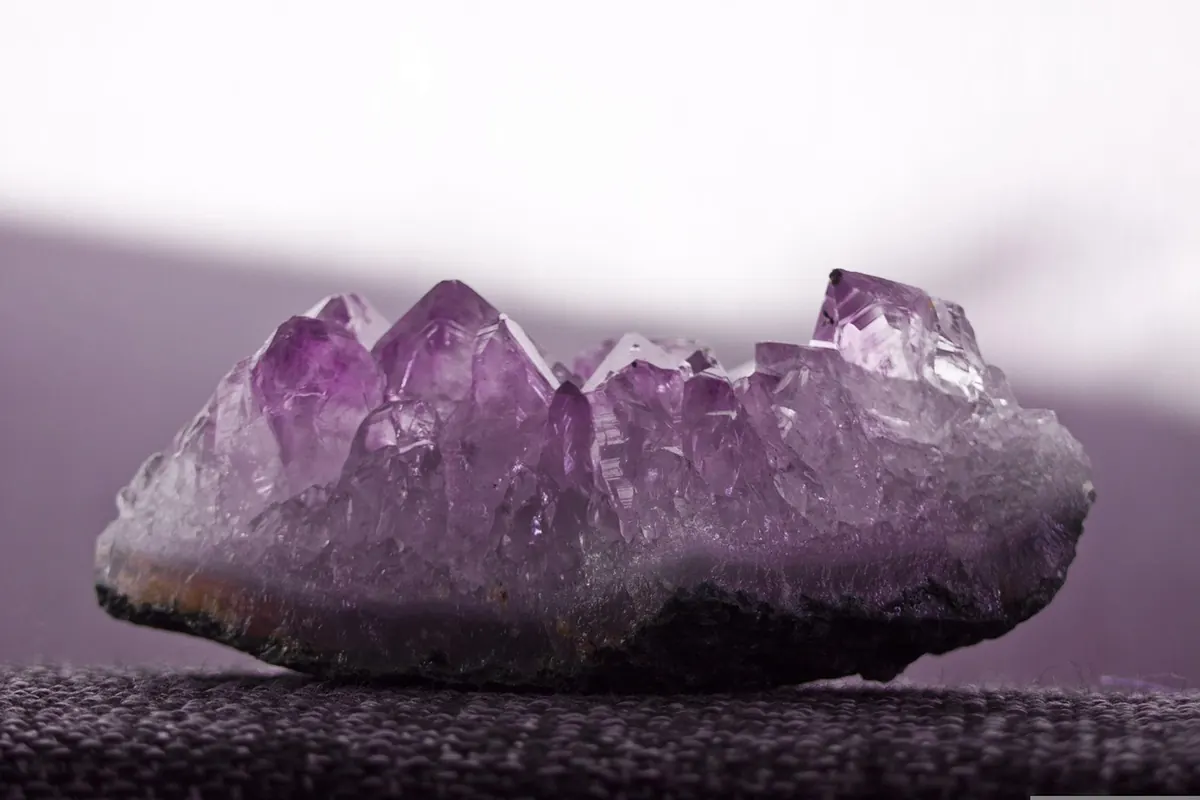
- 7 — amethyst, citrine, rose quartz, tiger's eye, agate, jasper, carnelian. The quartz family. Excellent in pendants, earrings and bracelets, and workable in rings if the setting is closed and you are gentle on your hands.
- 5 to 6.5 — opal, moonstone, labradorite, turquoise, lapis lazuli, obsidian, sodalite. Beautiful, but they will scuff. Keep them off the fingers you use most and out of the bottom of a handbag.
- Under 5 — fluorite, malachite, rhodochrosite, amber, pearl, coral, selenite. Pendants and earrings only. A malachite ring worn daily will be dull within a year and may scratch deeply, not merely lose shine.
Settings: how much protection are you buying?
A setting can add more wear-resistance than a jump in hardness. The trade-off is metal around the stone versus light through it.
- Bezel: a rim of metal encircles the stone. Maximum protection for a soft or brittle material, though it makes the stone look slightly smaller.
- Claw or prong: the classic look and the most light. Claws hold a stone by its edges — exactly where a soft stone is most likely to chip — and the tips wear down over years of use.
- Flush or gypsy: the stone sits in a recess, level with the metal. Secure and snag-free, which is why it suits men's rings and anyone whose hands are in and out of pockets all day.
- Channel: stones set in a row between two rails. Excellent for bracelets and bands, though the stones are usually small.
- Tension: the stone is held by the spring of the metal alone. Dramatic, but not the place for anything fragile, and it relies entirely on the metal keeping that spring.
Rings, pendants and bracelets are not equal
Rings
Rings take the most abuse by a wide margin, and the hand you write with takes more than the other. If a stone is under 7 and you still want it on a finger, the practical compromises are a bezel or flush setting, a smaller stone with less leverage, the ring finger of the non-dominant hand, and taking it off for cleaning, gardening, gym sessions and swimming.
Pendants
The safest home for a soft or fragile crystal. A pendant sits against fabric and skin, rarely hits anything hard, and can carry a large stone without much risk. Opal, fluorite, pearl, amber and malachite all do well here; a simple frame or cage setting is enough.
Bracelets, bangles and cuffs
Bracelets knock against desks, keyboards and each other. A bangle cut from a solid piece of agate or jade is robust; a bead bracelet strung with soft stones is not, because the beads grind together. With a mixed bracelet, alternate hard and soft stones rather than grouping them, and check the stringing every few months.
Earrings and brooches
Earrings are reasonably safe, studs more than drops that swing and catch. Brooches are the gentlest option of all, since a pin through fabric rarely meets grit — soft stones are perfectly at home there.
Care that keeps a setting tight
Most stone loss comes from loose claws rather than hard knocks. Have rings checked by a jeweller roughly once a year if you wear them daily, and straight away if you feel a stone move. Clean hard stones — diamond, sapphire, ruby, quartz — with warm water, a drop of washing-up liquid and a soft brush. Skip the ultrasonic cleaner for opal, pearl, emerald, turquoise, amber and anything you know has been treated or dyed; vibration and heat can do real damage. Take jewellery off before swimming, showering or applying hand cream, and store pieces in separate soft pouches so they cannot scratch one another. If a metal ever irritates your skin, ask a jeweller about nickel-free alternatives and speak to a pharmacist or doctor if the reaction persists.
Choosing once, and choosing well
Start with the piece, not the stone. A ring worn daily needs something at 9 or above, or a quartz-family stone in a bezel that you accept will need polishing. A pendant can carry almost anything, so let colour and feeling lead. Bracelets sit in the middle. Then look at the setting: more metal, less risk. If you are drawn to a soft crystal, put it where your hands cannot reach it — around your neck, on your ears, or pinned to a jacket — and it will look as good in ten years as it does on the day you buy it.
Photo: mrkaushikkashish / Pixabay