Raw vs Tumbled Crystals: Which Is Better for Beginners and Display?
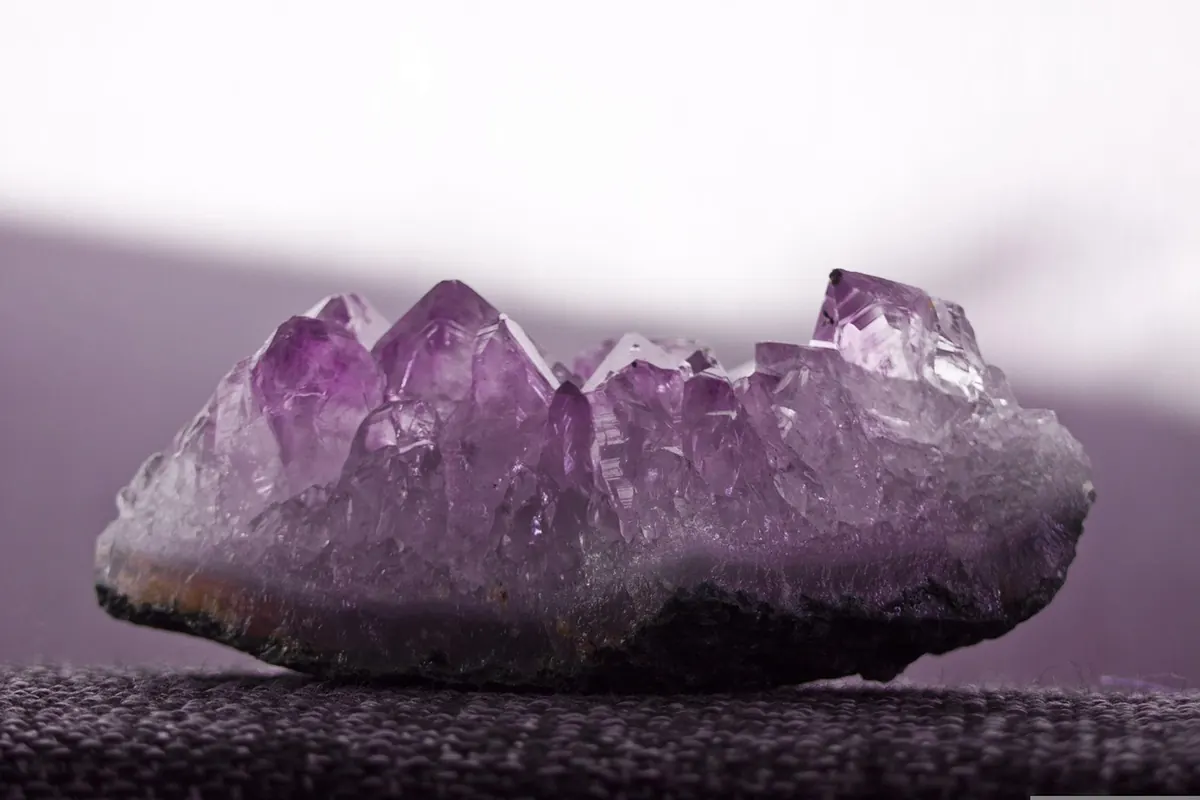
An amethyst can reach you as a jagged violet point still gripped by grey rock, or as a smooth purple pebble that sits neatly in your palm. Both are amethyst. Both are honest specimens. But they behave quite differently on a shelf, in a pocket and in your hands — and the better choice depends far less on which one is "best" than on what you actually want from it.
The look of a specimen
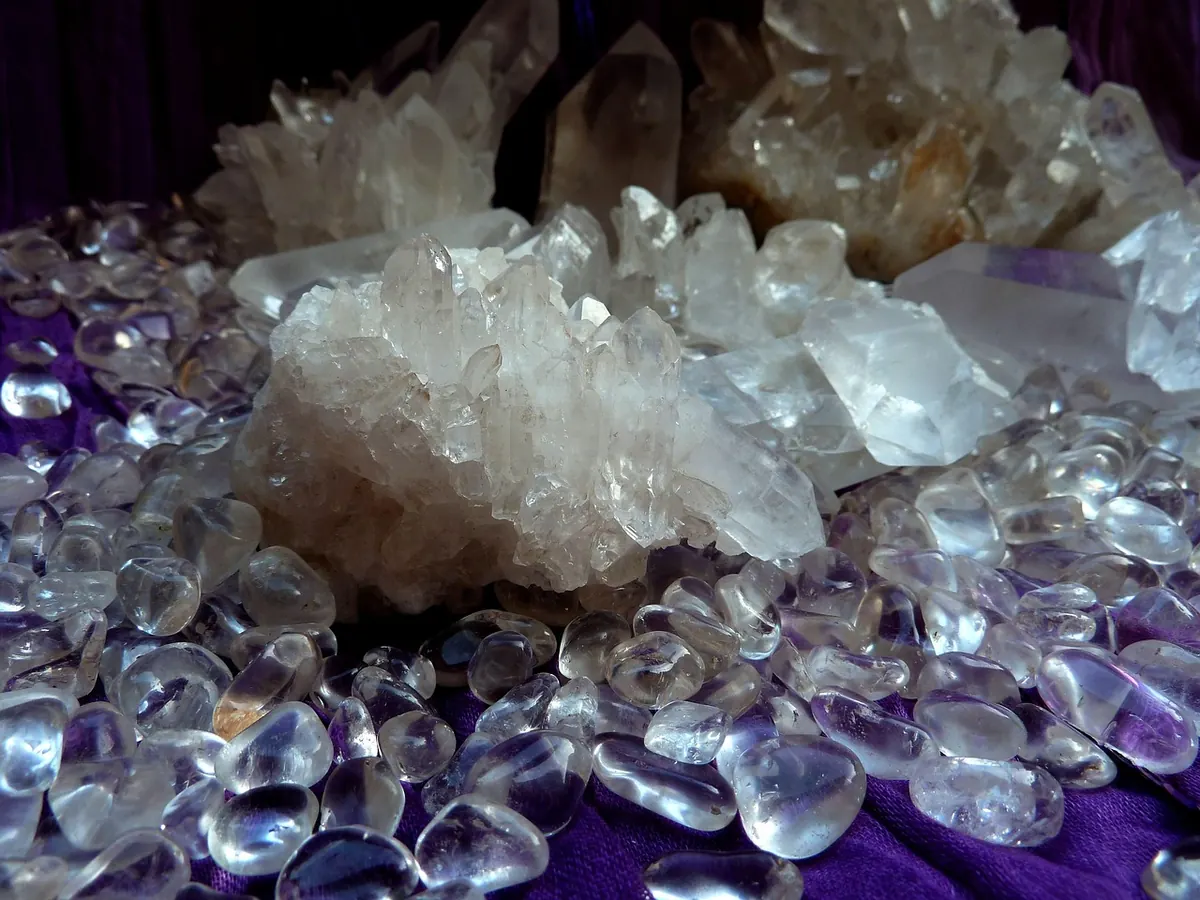
Raw material keeps the information. Crystal faces, terminations, growth lines, colour zoning and matrix are all still there, which is why a raw piece often looks dull or dusty in a shop cabinet and then transforms under a decent lamp. Some raw specimens are genuinely unglamorous until you wet them or turn them towards the light, and part of the pleasure is learning to see what you are looking at.
Tumbled stones trade that information for finish. Colour reads more evenly, the shape is soft and uniform, and the surface is usually glossy, sometimes polished almost to a mirror. The cost is detail: once a crystal has been through a barrel, two unrelated minerals can look confusingly similar, and treatments such as dyeing or heat treatment are far more common in tumbled stock. Ask sellers for the mineral name rather than a trade nickname, and be cautious of anything labelled with a locality when the stone clearly cannot be identified.
Durability: which survives real life
Hardness matters more than finish. Quartz, agate and jasper sit around 7 on the Mohs scale and cope well with pockets and handling. Fluorite (4) and calcite (3) scratch easily, and selenite (2) can be marked with a fingernail. A raw point chips at its termination, thin plates snap, and fragile matrix sheds grit every time you move it. Tumbling rounds off those vulnerable edges, so there is nothing left to break off — though the surface still scratches and dulls if it rattles around with keys or coins.
- Tumbled is the safer choice for pockets, handbags, travel, children's hands and anything handled often.
- Raw is better on a shelf, where nothing knocks into it and the shape can be appreciated.
- Both need common sense: a soft stone stays soft whatever has been done to its surface.
Price and what you are paying for
Small tumbled stones are usually the cheapest way into the hobby. Bulk tumbling is efficient and the output is uniform, so you are paying for polish and for someone else's sorting time. Rought by the kilo is also good value if you want variety and don't mind irregular shapes, but specimen-quality raw material is a different market. A piece with intact terminations, good lustre and an attractive matrix is priced on form and quality rather than weight, which is why a large rough lump can cost less than a small, perfect crystal.
For a first collection, buy tumbled stones to learn names and colours, and buy rough by weight when you want volume. Save your money for raw specimens that genuinely appeal to you — a piece you keep picking up is better value than five you forget about.
Care: water, sun and dust
Rules that suit quartz will ruin softer or soluble minerals, so match your routine to the stone.
- Dust with a soft, dry brush — a clean makeup brush or a soft paintbrush works well.
- Use lukewarm water and a drop of mild washing-up liquid only on hard, water-tolerant minerals such as quartz, agate and jasper. Rinse and dry with a soft cloth.
- Keep water away from halite, selenite and gypsum, calcite, malachite, and anything with a crumbling matrix. Iron-rich material such as pyrite can rust.
- Skip vinegar, bleach, acids and ultrasonic cleaners unless you are certain the mineral is safe. Acid etches calcite and dulls many polished surfaces.
- Keep amethyst, rose quartz, fluorite, kunzite and dyed stones out of strong direct sunlight, which can fade colour over time.
- Wash your hands after handling raw specimens, particularly lead- or arsenic-bearing minerals such as galena, and keep all specimens away from food, young children and pets. Never grind raw material or breathe the dust.
If you are just starting out
Begin with tumbled stones: they are inexpensive, robust and easy to handle while you learn to recognise the common minerals by colour, lustre and weight. Add raw specimens when you want to understand identification properly, because crystal habit, cleavage and matrix are what make a confident diagnosis possible — a polished pebble often cannot be identified with certainty at all.
A sensible starter set might include two or three tumbled quartz-family stones, one raw quartz point, one raw specimen with visible matrix, and one softer mineral so you learn about careful handling early. Buy from sellers who name their stock accurately, and treat any health claims you encounter with caution: for anything concerning your wellbeing, speak to a qualified healthcare professional.
Displaying the two together
The best shelves mix both. Use raw pieces as focal points on small risers or blocks, where their silhouettes and terminations do the work, and corral tumbled stones in shallow bowls, wooden trays or glass jars so they read as texture rather than clutter. Daylight or a warm lamp flatters most specimens; direct sun does not, and it fades some colours.
Fix wobbly raw points with museum putty, and stand anything with matrix on a tray so it can shed grit without marking the surface. Label pieces with the mineral name and locality if you know it, and group by colour for a calm look or by mineral family for a study shelf. Rotate the display occasionally so overlooked pieces get their turn in the light.
A simple rule to start with
Choose tumbled for hands, raw for shelves. Buy a handful of tumbled stones to handle, carry and compare, then let two or three well-chosen raw specimens anchor the collection. Check hardness before you clean anything, keep soft and soluble minerals dry, and buy slowly enough that every piece earns its place.
Photo: alusruvi / Pixabay